Class 8 Maths: A Square and A Cube (NCERT Solutions)
Solutions and guided problem breakdowns for Chapter 1 of Class 8 Maths (Ganita Prakash).
Textbook Pages 1 – 3
Q. Before the process begins, Khoisnam realises that he already knows which lockers will be open at the end. How did he figure out the answer?
Hint: Find out how many times each locker is toggled.
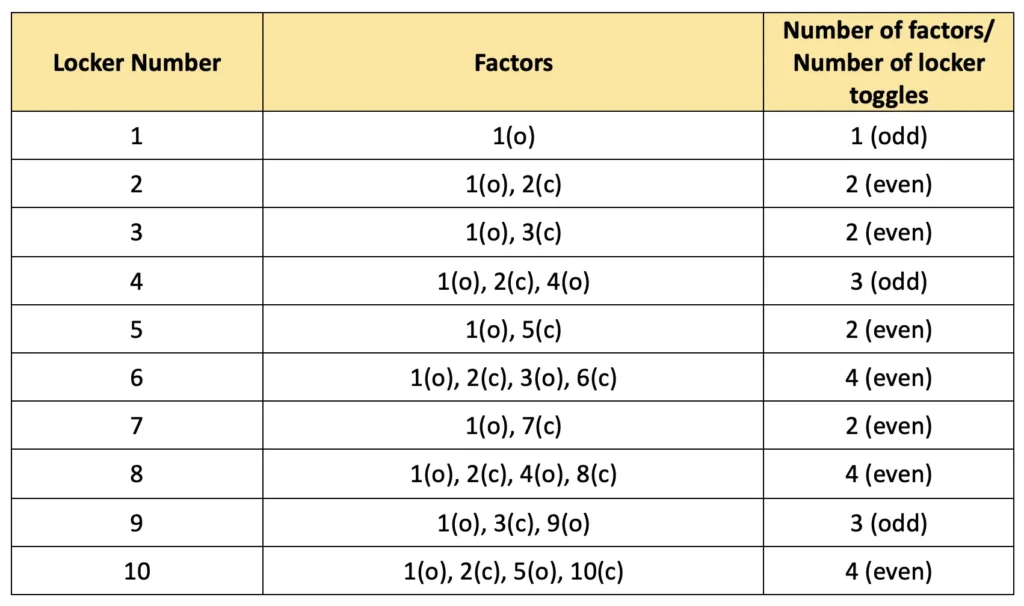
He noticed that the number of toggles a locker receives equals the number of factors of that locker’s number. A locker toggled an odd number of times will be open at the end; a locker toggled an even number of times will be closed. Only perfect squares have an odd number of factors, so exactly the lockers numbered with perfect squares (1, 4, 9, 16, …) remain open.
Q. Does every number have an even number of factors?
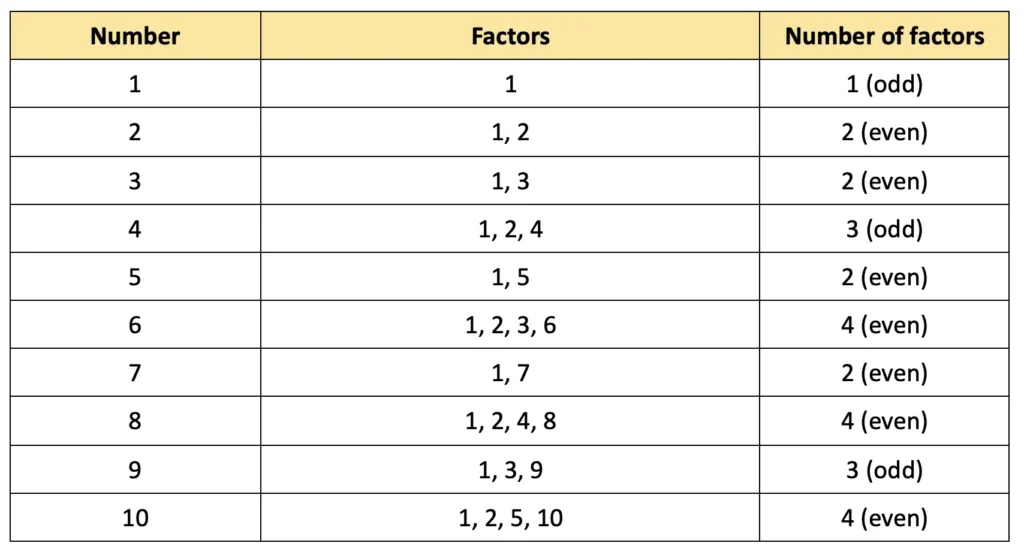
Not every number has an even number of factors. Only perfect squares have an odd number of factors, because they each have one factor which, when multiplied by itself, equals the number.
Q. Can you use this insight to find more numbers with an odd number of factors?
Q. Write the locker numbers that remain open.
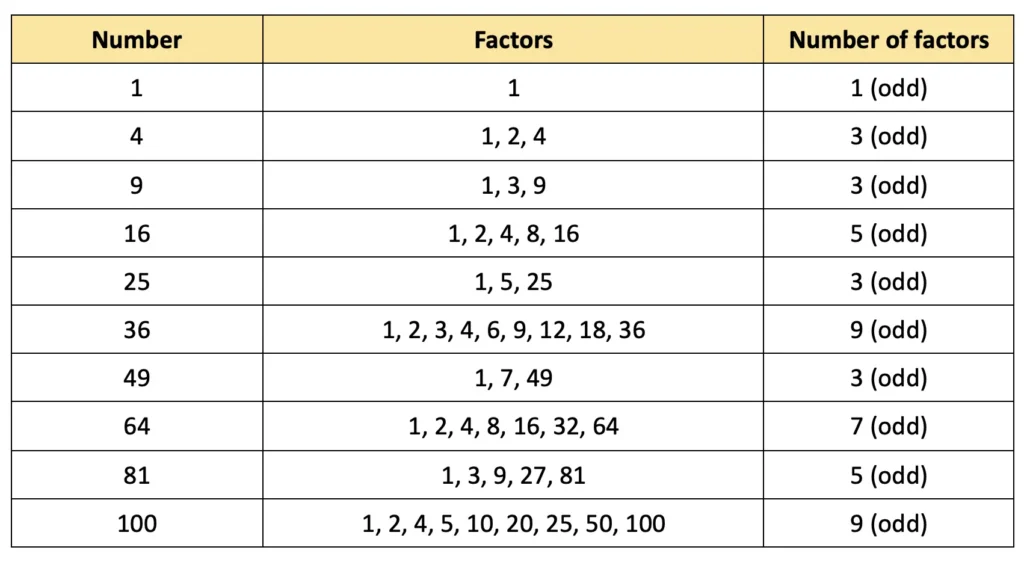
10 lockers with square locker numbers, i.e., 1, 4, 9, 16, 25, 36, 49, 64, 81, 100, will remain open.
Q. Which are these five lockers?
The lockers that are toggled twice are the prime numbers, since each prime number has 1 and the number itself as factors. So, the code is 2-3-5-7-11.
Textbook Page 4
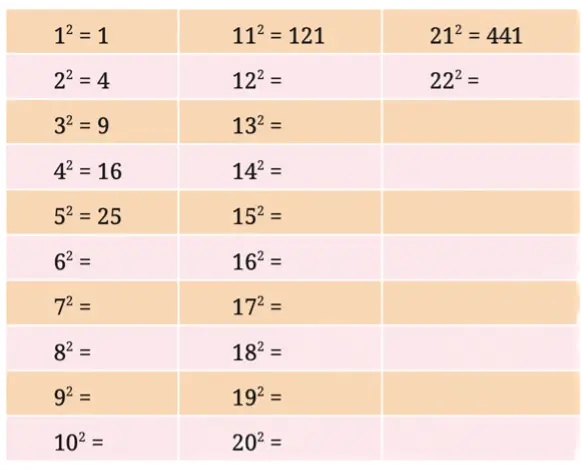
Q. Find the squares of the first 30 natural numbers and fill in the table below.
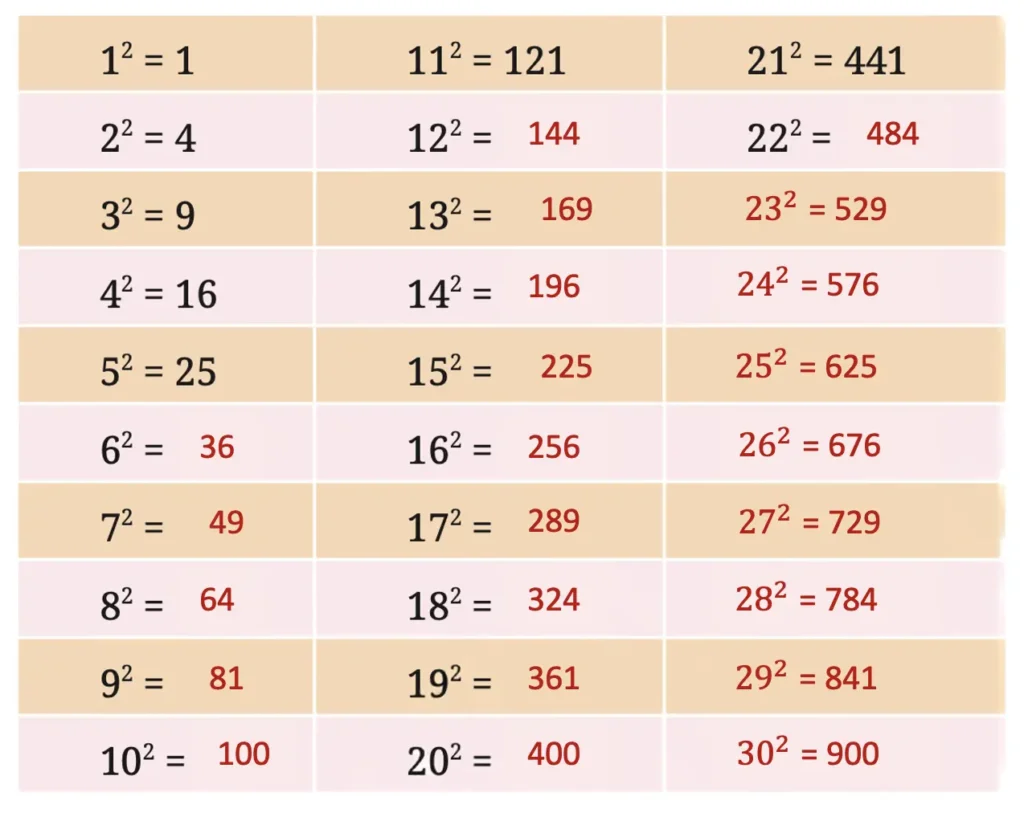
Q. What patterns do you notice? Share your observations and make conjectures.
All perfect square numbers end with 0, 1, 4, 5, 6, or 9, and none of them end with 2, 3, 7, or 8.
Q. If a number ends in 0, 1, 4, 5, 6, or 9, is it always a square?
We cannot determine if a number is a square just by looking at the digit in the units place. But the unit digit can tell us when a number is not a square. If a number ends with 2, 3, 7, or 8, then we can say that it is not a square. For example, 26 ends in 6 but is not a perfect square.
Q. Write 5 numbers such that you can determine by looking at their unit digit that they are not squares.
478, 1072, 7543, 9047, and 1257.
Textbook Page 5
Q. Which of the following numbers have the digit 6 in the units place?
(i) 382 (ii) 342 (iii) 462 (iv) 562 (v) 742 (vi) 822
(i) 382: Units digit 8 → 8 × 8 = 64 (ends in 4).
(ii) 342: Units digit 4 → 4 × 4 = 16 (ends in 6).
(iii) 462: Units digit 6 → 6 × 6 = 36 (ends in 6).
(iv) 562: Units digit 6 → 6 × 6 = 36 (ends in 6).
(v) 742: Units digit 4 → 4 × 4 = 16 (ends in 6).
(vi) 822: Units digit 2 → 2 × 2 = 4 (ends in 4).
Thus, a number with the last digit 4 or 6 has 6 as the last digit in its square.
Therefore, 342, 462, 562, and 742 have 6 in the units place.
Q. Consider the following numbers and their squares:
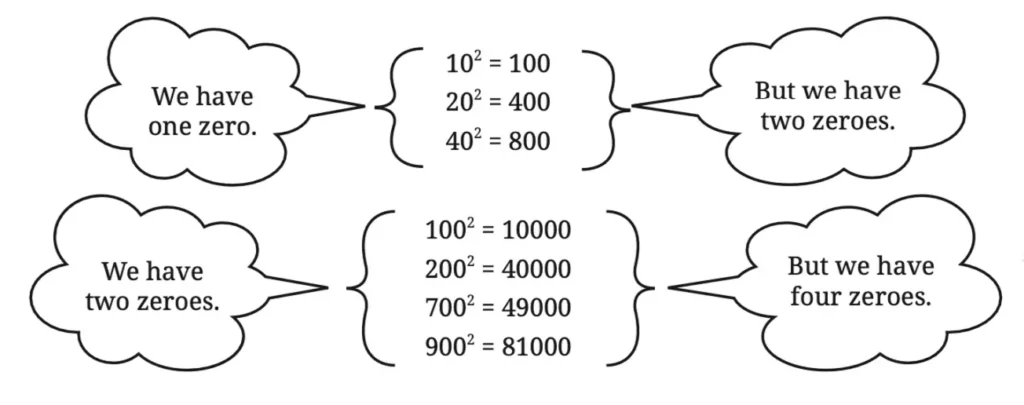
If a number contains 3 zeros at the end, how many zeros will its square have at the end?
The number of zeros at the end of the square of a number is always double the number of zeros at the end of the original number. Therefore, if a number contains 3 zeros at the end, its square will have 6 zeros.
Q. What do you notice about the number of zeros at the end of a number and the number of zeros at the end of its square? Will this always happen? Can we say that squares can only have an even number of zeros at the end?
The number of zeros at the end of the square of a number is always double the number of zeros at the end of the original number. Yes, this will always happen. Yes, we can say that squares can only have an even number of zeros at the end.
Q. What can you say about the parity of a number and its square?
The square of an even number is always even, and that of an odd number is always odd.
Textbook Page 7
Q. Find how many numbers lie between two consecutive perfect squares. Do you notice a pattern?
There are exactly '2n' numbers between n2 and (n + 1)2. For example: Between 32 (n = 3) and 42 (n + 1 = 4), there are 2 × 3 = 6 numbers.
Q. How many square numbers are there between 1 and 100? How many are between 101 and 200? Enter the values below, tabulating the number of squares in each block of 100. What is the largest square less than 1000?
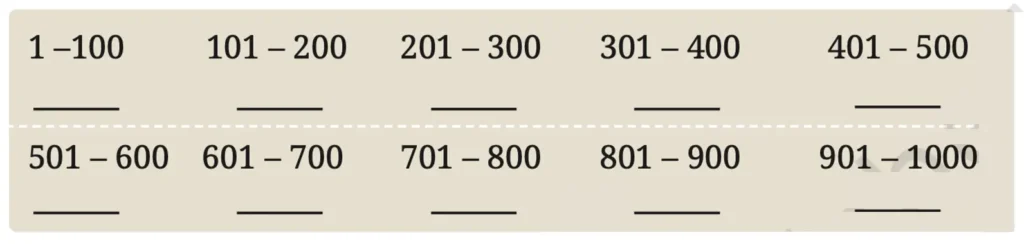
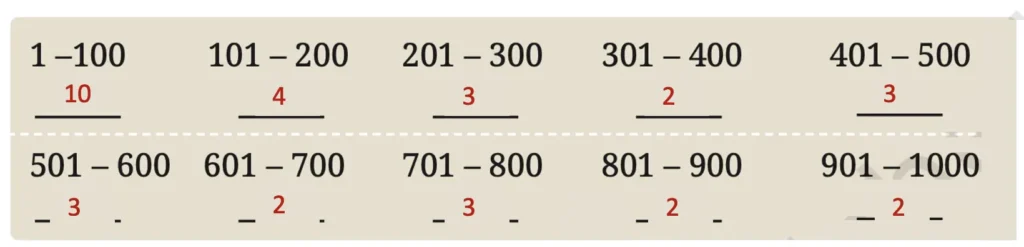
The largest square less than 1000 is 312 = 961.
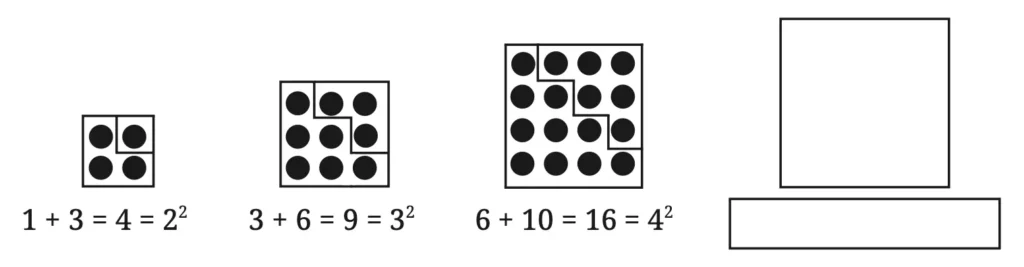
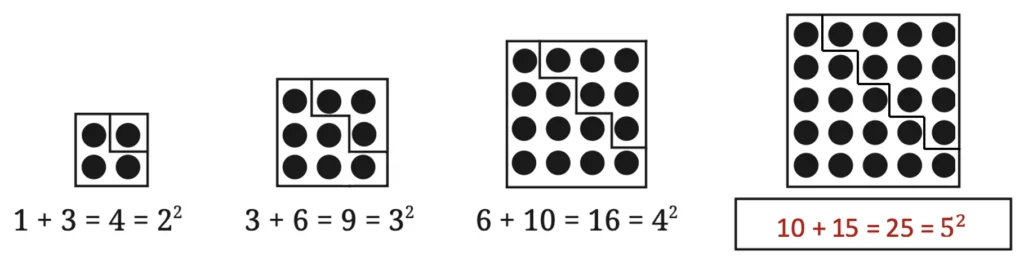
Q. Can you see any relation between triangular numbers and square numbers? Extend the pattern shown and draw the next term.
Textbook Page 9
Q. Find whether 1156 and 2800 are perfect squares using prime factorisation.
(i) 1156 = (2 × 2) × (17 × 17) = 22 × 172 = (2 × 17)2 = (34)2
∴ √1156 = 34. (It is a perfect square)
(ii) 2800 = (2 × 2) × (2 × 2) × (5 × 5) × 7 = 22 × 22 × 52 × 7
Since the factor 7 cannot be paired, 2800 is not a perfect square.
Textbook Pages 10 – 11 (Figure it Out)
1. Which of the following numbers are not perfect squares?
(i) 2032 (ii) 2048 (iii) 1027 (iv) 1089
A perfect square ends in 0, 1, 4, 5, 6, or 9.
(i) 2032 ends in 2 → Not a perfect square.
(ii) 2048 ends in 8 → Not a perfect square.
(iii) 1027 ends in 7 → Not a perfect square.
(iv) 1089 ends in 9 → It is a perfect square.
2. Which one among 642, 1082, 2922, 362 has the last digit 4?
(i) 642: 4 × 4 = 16 (last digit 6)
(ii) 1082: 8 × 8 = 64 (last digit 4)
(iii) 2922: 2 × 2 = 4 (last digit 4)
(iv) 362: 6 × 6 = 36 (last digit 6)
Therefore, 1082 and 2922 end in 4.
3. Given 1252 = 15625, what is the value of 1262?
(i) 15625 + 126 (ii) 15625 + 262 (iii) 15625 + 253 (iv) 15625 + 251 (v) 15625 + 252
1252 is the sum of the first 125 odd numbers.
1262 = 15625 + 126th odd number
126th odd number = (2 × 126) - 1 = 252 - 1 = 251.
∴ Correct answer is (iv) 15625 + 251.
4. Find the length of the side of a square whose area is 441 m2.
Area = side2 = 441 m2
side = √441 = 21 m.
5. Find the smallest square number that is divisible by each of the following numbers: 4, 9, and 10.
LCM of 4, 9, 10 = 180.
Prime factorisation: 180 = 2 × 2 × 3 × 3 × 5 = 22 × 32 × 5.
5 has no pair. To make it a square, multiply by 5:
180 × 5 = 900.
6. Find the smallest number by which 9408 must be multiplied so that the product is a perfect square. Find the square root of the product.
9408 = 26 × 72 × 3.
3 has no pair, so it must be multiplied by 3.
Product = 9408 × 3 = 28224.
√28224 = 23 × 7 × 3 = 8 × 21 = 168.
7. How many numbers lie between the squares of the following numbers?
(i) 16 and 17 (ii) 99 and 100
Between n2 and (n + 1)2, there are 2n numbers.
(i) For 16 and 17: 2 × 16 = 32 numbers.
(ii) For 99 and 100: 2 × 99 = 198 numbers.
8. Fill in the missing numbers:
12 × 22 × 22 = 32
22 × 32 × 62 = 72
32 × 42 × 122 = 132
42 × 52 × 202 = (___)2
92 × 102 × (___)2 = (___)2
42 × 52 × 202 = (21)2
92 × 102 × (90)2 = (91)2
9. How many tiny squares are there in the picture? Write the prime factorisation of the number of tiny squares.
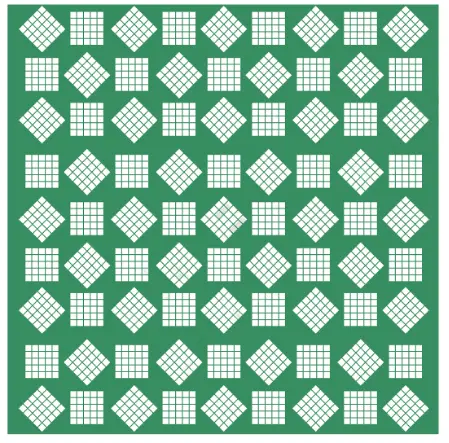
Squares grid = 9 × 9 = 81 larger blocks.
Tiny squares per block = 5 × 5 = 25.
Total tiny squares = 81 × 25 = 2025.
Prime factorisation: 2025 = 34 × 52.
Textbook Page 12
Q. Complete the table below.
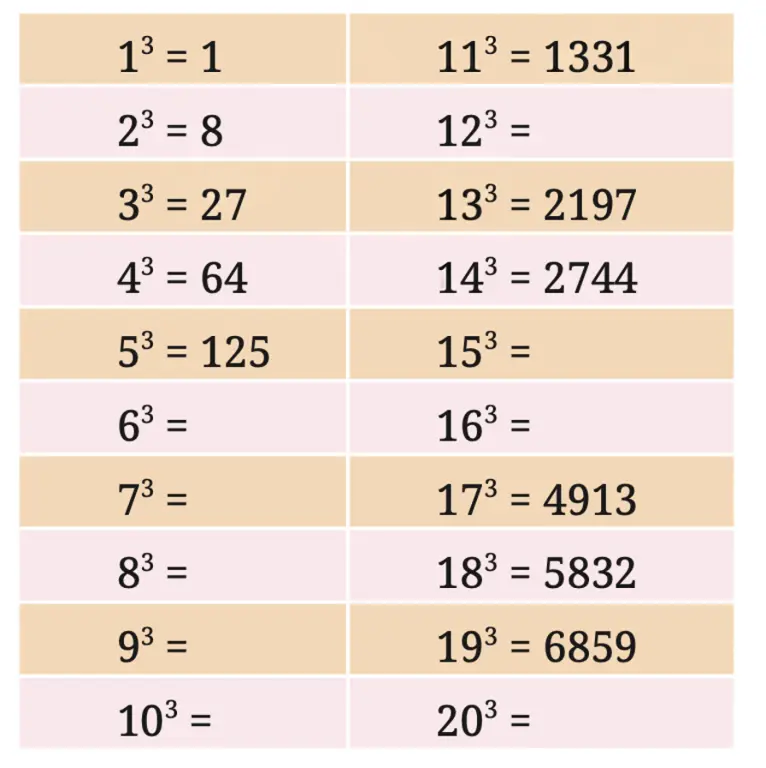
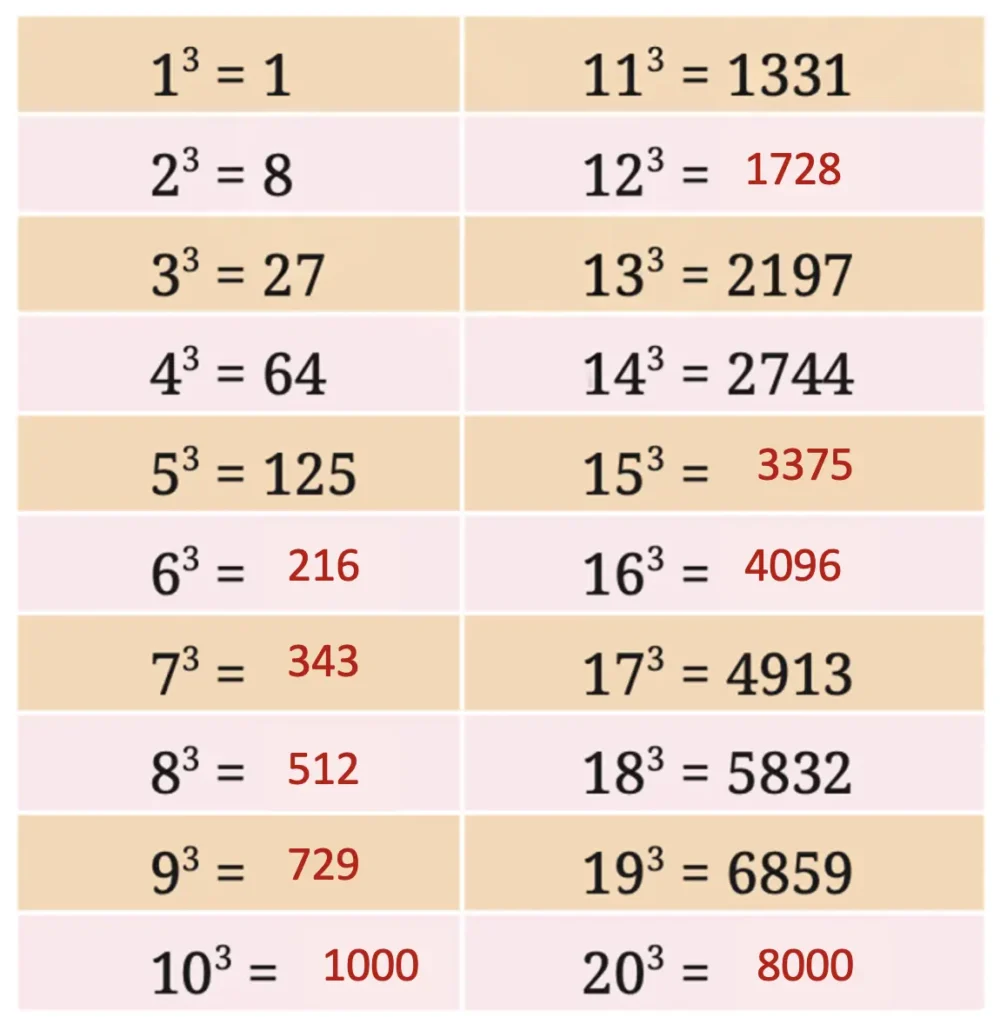
Q. What patterns do you notice in the table above?
(i) A cube ending in 1 ends in 1.
(ii) A number ending in 2 cubes to end in 8; a number ending in 8 cubes to end in 2.
(iii) A number ending in 3 cubes to end in 7; a number ending in 7 cubes to end in 3.
(iv) Numbers ending in 0, 4, 5, 6, or 9 retain the same units digit when cubed.
Q. What are the possible last digits of cubes?
Any digit from 0 to 9.
Textbook Page 13
Q. Similar to squares, can you find the number of cubes with 1 digit, 2 digits, and 3 digits? What do you observe?
1-digit cubes: 1, 8 (2 cubes)
2-digit cubes: 27, 64 (2 cubes)
3-digit cubes: 125, 216, 343, 512, 729 (5 cubes)
Unlike squares, cubes grow much more quickly, so fewer cubes fit into smaller ranges.
Q. Can a cube end with exactly two zeroes (00)? Explain.
No. Trailing zeros in a cube always appear in multiples of three.
Q. The next two taxicab numbers after 1729 are 4104 and 13832. Find the two ways each can be expressed as the sum of two positive cubes.
4104 = 23 + 163 = 93 + 153
13832 = 23 + 243 = 183 + 203
Textbook Page 14
Q. Can you tell what this sum is without doing the calculation?
91 + 93 + 95 + 97 + 99 + 101 + 103 + 105 + 107 + 109
This series consists of 10 consecutive odd numbers, and their sum equals 103 = 1000.
Textbook Page 15
Q. Find the cube roots of these numbers: (i) ³√64 (ii) ³√512 (iii) ³√729
(i) ³√64 = ³√(43) = 4
(ii) ³√512 = ³√(83) = 8
(iii) ³√729 = ³√(93) = 9
Textbook Pages 16 – 17 (Figure it Out)
1. Find the cube roots of 27000 and 10648.
(i) 27000 = 23 × 33 × 53 = (2 × 3 × 5)3 = 303 → ³√27000 = 30.
(ii) 10648 = 23 × 113 = (2 × 11)3 = 223 → ³√10648 = 22.
2. What number will you multiply by 1323 to make it a cube number?
1323 = 33 × 72.
To form a triplet for 7, multiply by 7.
3. State true or false. Explain your reasoning.
(i) The cube of any odd number is even.
(ii) There is no perfect cube that ends with 8.
(iii) The cube of a 2-digit number may be a 3-digit number.
(iv) The cube of a 2-digit number may have seven or more digits.
(v) Cube numbers have an odd number of factors.
(i) False: Cube of an odd number is always odd (e.g., 33 = 27).
(ii) False: 23 = 8 ends with 8.
(iii) False: Smallest 2-digit cube is 103 = 1000 (4 digits).
(iv) False: Largest 2-digit cube is 993 = 970299 (6 digits max).
(v) False: Only perfect squares have an odd number of factors (e.g., 8 has 4 factors: 1, 2, 4, 8).
4. Guess the cube roots without factorisation: (i) 1331 (ii) 4913 (iii) 12167 (iv) 32768
(i) ³√1331 = 11 (between 10 and 20, ends in 1).
(ii) ³√4913 = 17 (between 10 and 20, ends in 7 because unit digit is 3).
(iii) ³√12167 = 23 (between 20 and 30, ends in 3 because unit digit is 7).
(iv) ³√32768 = 32 (between 30 and 40, ends in 2 because unit digit is 8).
5. Which of the following is the greatest? Explain your reasoning.
(a) 673 - 663
(b) 433 - 423
(c) 672 - 662
(d) 432 - 422
Using formulas: n3 - (n - 1)3 = 3n2 - 3n + 1 and n2 - (n - 1)2 = 2n - 1.
(a) 673 - 663 = 3(672) - 3(67) + 1 = 13467 - 200 = 13267
(b) 433 - 423 = 3(432) - 3(43) + 1 = 5547 - 128 = 5419
(c) 672 - 662 = 2(67) - 1 = 133
(d) 432 - 422 = 2(43) - 1 = 85
Therefore, (a) 673 - 663 is the greatest.

No comments:
Post a Comment